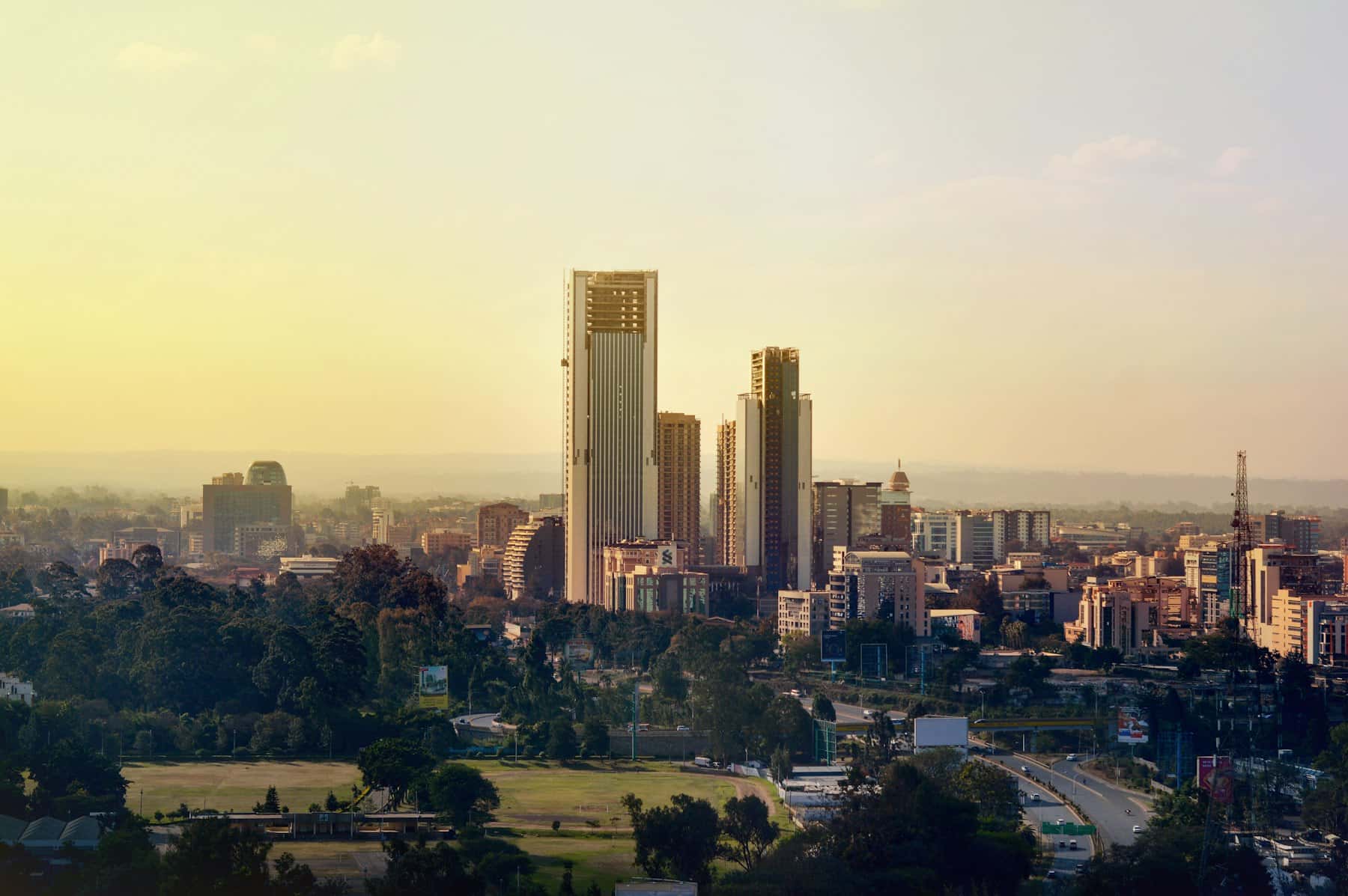
How the Nairobi Expressway has actually moved property prices, four years on
Four years after the Nairobi Expressway opened, the price impact on Westlands, Mlolongo, Syokimau and the JKIA corridor is finally readable. Here is the honest, neighbourhood-by-neighbourhood picture, the locations that gained the most, and where the expressway delivered nothing but louder traffic.
When the Nairobi Expressway opened in mid 2022 it was sold as a transformational piece of infrastructure for the city’s real estate market. Four years on the story is more nuanced. The expressway did move property prices. Just not uniformly, not in the directions every agent claimed at the time, and not always upward. Here is the honest, segment-by-segment picture for diaspora investors trying to understand where the corridor actually rewards capital today.
What the expressway actually changed
The 27 km elevated road runs from Mlolongo on the eastern edge of the city through JKIA, Mombasa Road, Nyayo Stadium, the CBD edge, Westlands and on to James Gichuru. The single most important thing it changed for property is journey-time variance. A Westlands resident heading to JKIA used to budget 60 to 110 minutes during peak. Today that same trip is 25 to 35 minutes consistently. The variance compressed more than the average dropped, and tenants and buyers price variance more aggressively than they price means.
Where the expressway clearly added value
Westlands and the western terminus
The strongest single beneficiary. Westlands shifted from being a Nairobi business district with poor connectivity to the airport to being one of the few addresses where you can credibly promise a JKIA arrival in under 30 minutes. Two-bedroom apartment rents in Westlands have risen roughly 12 to 18 percent since 2022 in nominal KES terms, with the sharpest movement in buildings within 1 km of the James Gichuru on-ramp. Capital values for prime compounds have moved 8 to 14 percent over the same window.
Syokimau and Mlolongo
The eastern terminus. Pre-expressway, the Mombasa Road corridor south of Embakasi was a 90 minute commute nightmare. Today, Syokimau and Mlolongo are 25 to 30 minutes from Westlands by expressway. Two-bedroom apartment prices in mid-tier Syokimau compounds have risen 15 to 25 percent since 2022, off a lower base. The discount-to-Westlands has compressed but not closed. For diaspora investors looking at entry-price exposure to Nairobi, this corridor is the single clearest piece of infrastructure-driven price movement in the city.
The JKIA airport edge
Hotels, serviced apartments and short-stay listings within easy expressway access of JKIA have seen the sharpest occupancy and rate gains. The night-before flight market that used to mean a CBD or Mombasa Road airport hotel now extends comfortably into Kilimani, Lavington and even Westlands. Short-stay operators who reposition listings as “15 minutes to JKIA via expressway” consistently command 10 to 20 percent rate premiums.
Where the expressway delivered less than promised
Mombasa Road frontage south of Nyayo
The expressway runs above Mombasa Road. For commercial properties on the road itself the elevated structure was a mixed blessing: less ground-level traffic congestion at peak times, but visible noise and visual obstruction from the slab above. Retail frontage along stretches of Mombasa Road has underperformed the broader market.
Industrial Area and South B
Connectivity improved marginally but the expressway has no on-ramps inside Industrial Area, and the toll cost (KES 360 to KES 1,800 one way depending on category and section) deters frequent commercial use for short trips. South B saw modest residential spillover but nothing close to the Westlands or Syokimau move.
The toll economics matter
The expressway is tolled. A daily two-way Westlands to JKIA commute costs roughly KES 1,000 to KES 1,500 per day for a saloon. That is KES 22,000 to KES 33,000 a month, which is meaningful even for higher earners. The clearest tenant segment that consistently uses the expressway every day are flight crew, frequent international travellers, consultants moving between client offices in Westlands and Industrial Area, and senior corporate staff with employer-paid commutes.
For ordinary residential commuters, the expressway is used selectively, two to three times a week, on the days that matter (early flight, late evening return, bad-weather mornings). That selective-use pattern still adds value, but less than the daily-commute narrative implies.
What this means for buyers in 2026
- Westlands premium is mostly priced in. The expressway gain has been absorbed into Westlands asking prices. New entrants pay closer to the new equilibrium than to the pre-2022 discount. The remaining edge is on specific compounds within easy on-ramp access.
- The Syokimau and Mlolongo trade still has room. The price gap to Westlands compressed but is far from closed, and the connectivity gap has fundamentally closed. For diaspora investors comfortable with mid-tier compounds at lower entry prices, this is one of Nairobi’s most interesting risk-adjusted submarkets.
- Short-stay near JKIA still has upside. The stay-the-night-before-flight market is growing and the operating cost difference between Westlands and Mombasa Road for that use case has shrunk dramatically.
- Be sceptical of new corridor narratives. Promoters now sell Ngong Road, Thika Superhighway and the under-construction Western Bypass with the same script that ran on the expressway in 2022. Wait for evidence; the expressway took 18 to 30 months to show readable price effects.
Infrastructure premia in Nairobi are real, durable and slower to materialise than the marketing suggests. Buy after the connectivity is built and the journey-time data is in, not on the press release.
How Goldstay handles it
For sourcing clients we model the actual journey-time improvement and toll cost into the rental expectations and the buy underwriting. We do not rely on agent-driven “expressway access” claims for price justification. Read the related neighbourhood yield analysis and the emerging Nairobi suburbs piece for where the expressway corridor sits inside the broader 2026 picture.
Every assumption behind a figure like this is shown in our yield calculator.

Goldstay Research covers macro property data, neighbourhood pricing, rental yields and policy across the Kenyan and Ghanaian markets. The desk publishes the firm's view on market trends, oversupply, currency and the longer term direction of property values.
The Nairobi Expressway: what it actually changed
The Nairobi Expressway opened in 2022 and the picture is now clearer than the hype that surrounded it. Here is the honest 2026 audit of what the expressway actually changed for property values, suburb access, commuter behaviour and the longer term shape of the city.
Parklands and Highridge: the 2026 Nairobi deep dive
Parklands and Highridge are some of the most established, most undervalued and most misunderstood neighbourhoods in Nairobi. Here is the honest 2026 read on who lives there, what property costs, what rents look like, and where the suburb sits in the wider Nairobi map.
Kasarani: the complete 2026 guide
Kasarani is one of the largest residential constituencies in Nairobi, with a vast mid-market apartment supply, the Kasarani Stadium and a real working-professional rental market. Here is the honest 2026 guide on Kasarani property, who lives there and how the market works.
Ruiru and Tatu City: the institutional north
Ruiru sits on the Thika Superhighway with Tatu City, Northlands and several master-planned communities reshaping the residential map of Nairobi’s north. Here is the honest 2026 guide on Ruiru, Tatu City and the institutional north corridor.
Eastleigh: the rental machine Kenyan investors keep underestimating
Eastleigh has one of the strongest rental engines in Nairobi, anchored by a commercial ecosystem that no other suburb comes close to matching. Here is the honest 2026 guide to the suburb most premium investors ignore, with property prices, rental dynamics, the real risks and the disciplined way to invest.
The Thika Road corridor: Nairobi’s northern residential belt
Thika Road runs from the Nairobi CBD into the northern metro and the suburbs along the way each have their own character, price level and tenant profile. Here is the honest 2026 guide on the Nairobi side of the Thika Road corridor for buyers and investors.
Ready to stop worrying about your property?
Join diaspora landlords across Europe, the UAE and North America who trust Goldstay.
Prefer to call? +254 702 471 993