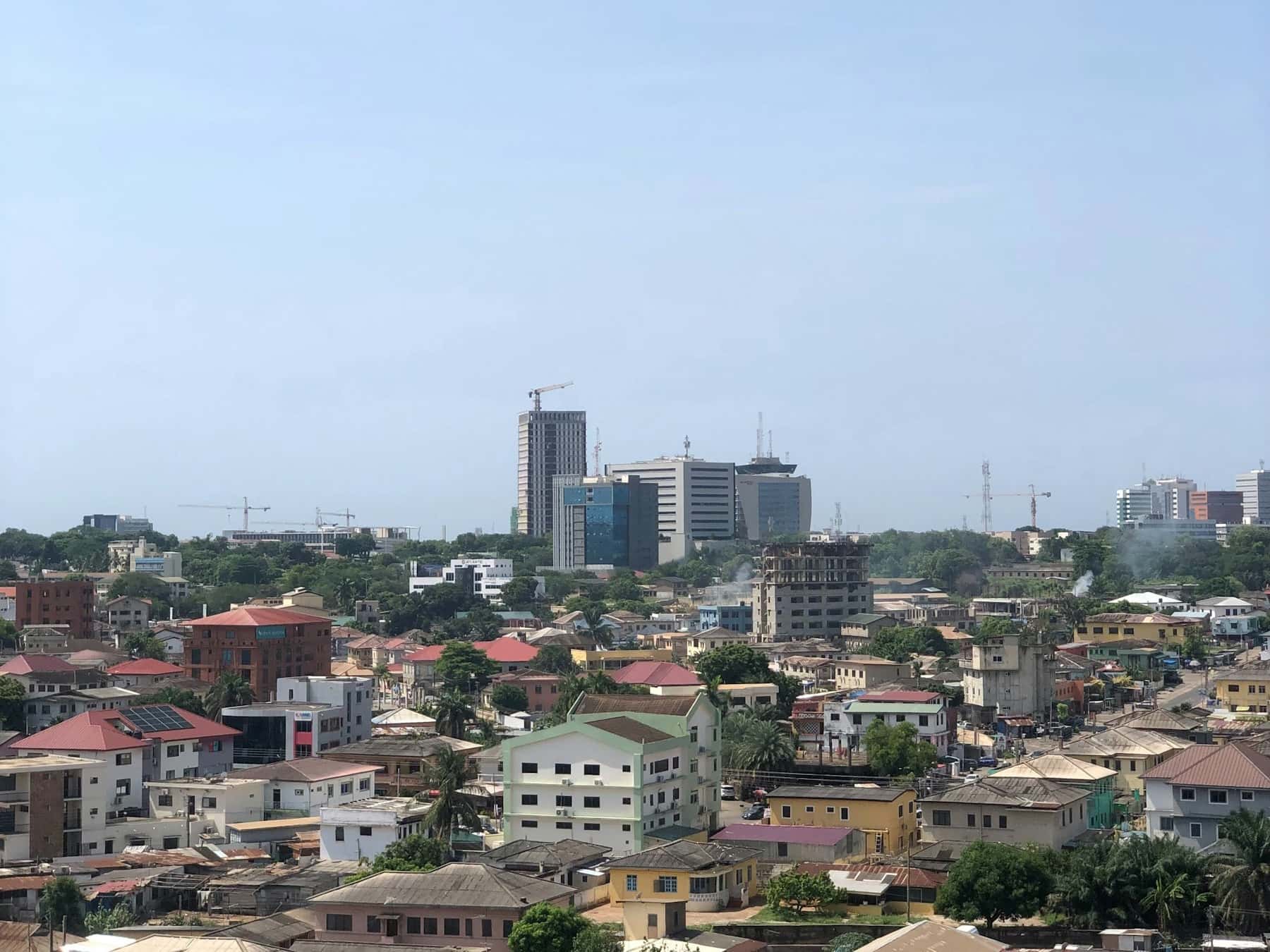
Accra property market review: the honest H1 2026 update
Six months of Accra property data, with no marketing gloss. What actually happened to prices, rents, yields, off-plan and the cedi in H1 2026, and what it means for a diaspora buyer looking at H2.
The first half of 2026 was quieter for Accra property than the marketing suggests, more interesting than the headline suggests, and more informative than either. Sale volumes were flat to slightly down. Prices held in the top segments and softened at the middle. Yields improved on the apartment stock. Currency remained the story, as it has been for four years running. Here is what happened, with the numbers, and what a diaspora buyer should take into H2.
The headline numbers
- Sale volumes: Estimated diaspora residential purchases in Accra were roughly 8 per cent below H1 2025 by transaction count and roughly flat by value, indicating a shift toward higher-ticket, fewer-transaction buyers.
- Cantonments prices: Held flat at the top (standalone, embassy grade). Softened 3 to 5 per cent on the two bedroom apartment stock.
- East Legon prices: Flat overall. Slight compression on the older core stock, small appreciation on the Hills extension.
- Airport Residential prices: Up 2 to 4 per cent on serviced-standard apartment stock. Down slightly on aging mid-tier product.
- Cedi: Continued a managed slide against USD through H1, roughly 6 per cent from 1 January to end of June.
- Rental market: Gross rents in USD held or nudged up. Yields expanded modestly as prices flattened.
Who was actually buying
The composition of the diaspora buyer pool in H1 2026 shifted noticeably. Fewer first-time diaspora buyers, more repeat buyers adding to existing portfolios. UK and North American source markets remained dominant, but Middle East diaspora (particularly Dubai-based Ghanaians) grew as a share of transactions. Ticket size skewed higher: the median transaction moved from roughly USD 220,000 in H1 2025 to roughly USD 290,000 in H1 2026, driven partly by the softening on the lower end and partly by the buyer profile shift.
What actually happened on rents
USD-denominated rents
Held or nudged up 2 to 4 per cent across embassy and senior corporate segments. This is the segment that continues to hold Accra’s rental economics up, because the tenants setting these prices are indexed to USD headquarters budgets and are largely insensitive to cedi moves.
Cedi-denominated rents
The story is more complicated. Nominal cedi rents rose 8 to 12 per cent through H1 as landlords tried to keep pace with the cedi slide. In USD terms, cedi rents were roughly flat to slightly down. Tenants in this segment (mid-tier local corporate, returnee professionals) are pushing back harder on renewals than they were a year ago, and void periods have lengthened by roughly a week on average.
Short-stay rents
The short-stay market softened notably in H1. Business travel to Accra was down on the year, particularly in the mining and oil and gas sectors. Occupancy on serviced two bedroom stock in Airport Residential held around 62 per cent versus 71 per cent in H1 2025. ADR held roughly flat in USD. Revenue per available unit was down materially.
The short-stay softness in H1 2026 is the single most important data point for Accra buyers underwriting mixed-use properties. Do not use 2024 short-stay numbers as your base case for 2026 and 2027.
Off-plan in H1
Two well-known developers ran into completion difficulty in H1 2026, one on the Airport Residential fringe and one in East Legon Hills. Neither has entered formal insolvency but both have paused active construction on named projects and renegotiated timelines with existing buyers. This is the second consecutive year with a visible off-plan completion stress event in Accra, and it should be priced into any off-plan diligence going into H2.
On the positive side, three well-managed developers completed and handed over units on time in H1, all within their published schedules. The market can complete on time; the market can also stall. The difference between the two is the developer, and diligence on the developer is the single most important variable in an off-plan purchase.
What H2 needs to look like
- Cedi. A further managed slide through H2 is the base case, at a similar or slightly faster pace than H1. Base-case USD-cedi at year-end is roughly 8 to 12 per cent above 1 January.
- Prices. Top-end stable, mid-market soft. Meaningful price discovery is more likely on aging apartment stock than on newer or top-tier product.
- Rents. USD rents holding or up modestly. Cedi rents will nominally rise, USD equivalents will not.
- Yields. Continue to expand modestly on the apartment segment as prices flatten faster than rents. Standalone product will remain in the 4.5 to 6 per cent gross range.
- Off-plan. Additional completion stress is likely from at least one more developer. Escrow discipline and phased-payment structures are the single defence.
What diaspora buyers should do in H2
For buyers with USD to deploy, H2 2026 is a more favourable buyer’s market than H1 2025 was. Softening on the mid-market apartment segment, in particular, is creating price-discovery on properties that were previously firmly held. For buyers considering off-plan, the message is the same as it has been for two years: the escrow structure and the developer track record are the underwriting, not the finish specification or the marketing.
For diaspora landlords who already own, H2 2026 is a moment to review the tenant strategy on the existing portfolio. USD leases where possible, cedi leases with indexation clauses where USD is not achievable, and honest conversations with existing tenants at renewal about whether the current rent still supports the asset. Silent renewal at last year’s cedi rent is a decision to accept a real-terms rent cut.
How Goldstay reads this
Our sourcing team is prioritising two segments through H2 2026: mid-market apartment stock at 5 to 12 per cent below H1 2025 pricing (where the current softening opens real value), and top-tier standalone product where a specific vendor is motivated (where price discovery is otherwise rare). Our management team is repricing rent strategies across the diaspora landlord book in Q3, moving as many tenancies as can be moved onto USD or indexed cedi structures before H2 renewals settle.
Related reading: the 2026 Accra yield map, Cantonments in 2026, and the Airport Residential buyer guide.

Goldstay Research covers macro property data, neighbourhood pricing, rental yields and policy across the Kenyan and Ghanaian markets. The desk publishes the firm's view on market trends, oversupply, currency and the longer term direction of property values.
Best Accra neighbourhoods for USD yield in 2026
Ranking Accra neighbourhoods on the metric that actually matters for a diaspora landlord: USD-denominated net yield after tax and management. Which pockets stack up, which do not, and why the answer is not what most agents will tell you.
How to buy Accra property from London or the US: the remote diligence playbook
Buying in Accra from London, New York or Toronto is now a routine process, provided the diligence stack is right. This is the exact sequence we run for diaspora clients who never set foot in Ghana before completion.
Cantonments Accra: is the diplomatic premium still worth it in 2026?
Cantonments still carries the highest per-square-metre pricing in Accra, and the tenant covenants that justify it. But the arithmetic has shifted in 2026. Here is what the numbers actually say and where they still stack up.
Airport Residential Accra: the honest 2026 buyer guide
Airport Residential has quietly become the most watched Accra buying zone in 2026. This is what actually drives the pricing, which pockets are underwriting what tenant, and where the diligence is easiest to get wrong.
Buying property in East Legon: the complete 2026 diaspora guide
East Legon is Accra's single biggest diaspora buying zone. This is the honest 2026 guide to the pockets, the price ranges, the diligence traps, and the tenant economics that decide whether you buy well or badly.
Ghana's 8% rental withholding tax: a complete guide for diaspora landlords
What the GRA actually expects from residential landlords in Accra in 2026, who is liable to withhold, the filing mechanic, the three traps that catch most diaspora owners, and how a manager handles all of it.
Ready to stop worrying about your property?
Join diaspora landlords across Europe, the UAE and North America who trust Goldstay.
Prefer to call? +254 702 471 993